
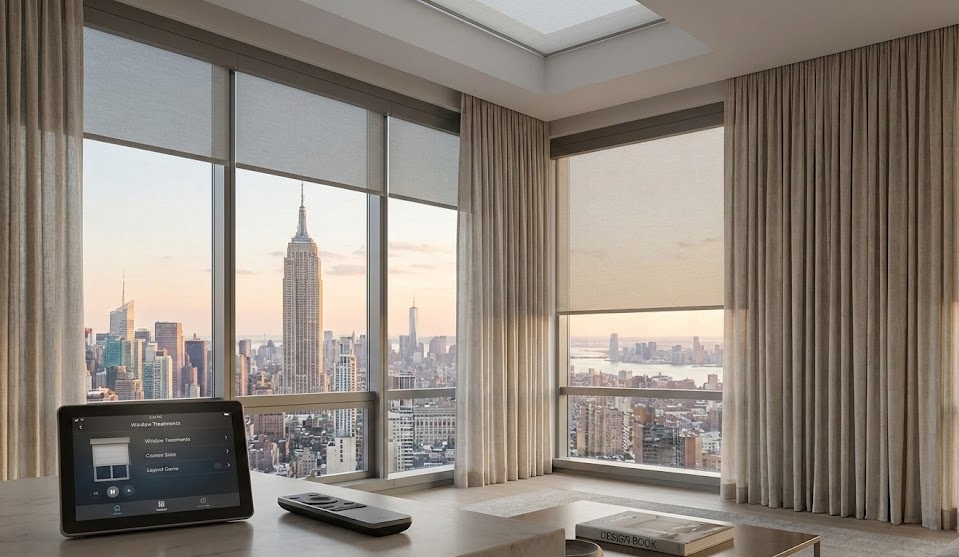
Living in New York City is a study in contradictions. We crave the soaring views of the Chrysler Building or the leafy expanse of Prospect Park, yet we value our privacy like gold. In a city where your neighbor’s living room is often a mere thirty feet across the airshaft, your windows are more than just glass—they are the boundary between your private sanctuary and the relentless energy of the “City That Never Sleeps.”
As a design professional who has navigated the narrow hallways of pre-war walk-ups and the expansive floor-to-ceiling glass of Hudson Yards, I have learned that window treatments NYC residents actually love aren’t just about “curtains.” They are about light management, climate control, and reclaiming your personal space.
Navigating the New York Window Challenge
The first time I stepped into a 40th-floor unit in Long Island City, the glare was so intense I couldn’t see the client’s face. The “New York Window” presents unique hurdles: extreme heat gain in the summer, drafty frames in the winter, and the “fishbowl effect” at night.
Why Off-the-Shelf Solutions Fail in the Five Boroughs
Standard retail blinds are built for standard suburban windows. NYC windows are anything but standard. Between the settling of century-old brownstones and the unconventional dimensions of modern lofts, a “one size fits all” approach usually results in unsightly gaps. These gaps are more than just an aesthetic flaw; they let in light leaks that can ruin a Saturday morning lie-in and compromise the insulation of your home.
The Privacy vs. Light Paradox
The most common request I hear is: “I want people to stop looking in, but I don’t want to live in a cave.” In Manhattan, light is a luxury. Choosing the wrong fabric can turn a sun-drenched alcove into a gloomy corner. The solution lies in layering and material density—finding that “sweet spot” where silhouettes are obscured but the golden hour glow still permeates the room.
Custom Shades: The Backbone of the NYC Apartment
When space is at a premium, custom shades are the gold standard. They offer a flush fit that mimics the architecture of the window itself, maintaining the clean lines that modern NYC interiors demand.
Solar Shades: Preserving Your Multi-Million Dollar View
If you’ve paid for a view of the skyline, the last thing you want to do is hide it behind a heavy fabric. Solar shades are the “sunglasses” of the window treatment world. They utilize a technical weave that allows you to see out while significantly reducing UV rays and heat. In my experience, a 3% to 5% openness factor is the “Goldilocks” zone for New Yorkers—enough density to protect your hardwood floors from fading, but transparent enough to keep the city lights in sight.
Cellular Shades: The Quiet Hero of Insulation
NYC winters are brutal, and those iconic large windows can feel like a block of ice. Cellular (honeycomb) shades are engineered with air-trapping pockets that act as a thermal barrier. I’ve visited apartments where switching to custom cellular shades lowered the ambient “draftiness” by several degrees instantly. They are the most functional choice for those living in drafty pre-war buildings.
Roller Shades: Minimalism Meets Durability
For a high-traffic Brooklyn rental or a sleek minimalist condo, custom roller shades are unbeatable. They are easy to clean, simple to operate, and disappear into a slim headbox when not in use. We often recommend these for kitchens and bathrooms where moisture and ease of maintenance are top priorities.
Elevating Aesthetics with Drapery and Curtains
While shades handle the “function,” drapery and curtains provide the “soul.” In a city made of steel, glass, and concrete, soft treatments add the necessary warmth and acoustic softening.
Layering Techniques for Sound Dampening
The sirens, the delivery trucks, the late-night revelers—New York is loud. One of the best-kept secrets of high-end NYC design is using elegant custom drapery as acoustic insulation. A heavy velvet or a lined linen drapes don’t just block light; they absorb sound waves. By layering a blackout roller shade under a floor-to-ceiling curtain, you create a “dead air” space that significantly mutes the city’s roar.
Choosing Fabrics That Withstand Urban Dust
Let’s be honest: NYC is dusty. If you leave your windows open for an hour, a fine grey film appears. When selecting fabrics, I always steer clients toward high-quality synthetics or treated natural blends. These materials don’t “grab” urban soot as aggressively as raw silks, ensuring your treatments look pristine for years rather than months.
The Rise of Motorized Window Treatments
In the last five years, motorized window treatments have moved from a luxury “extra” to a core necessity, especially in homes with high ceilings or numerous windows.
Smart Home Integration: Beyond the Remote Control
Imagine your shades automatically lowering as the sun hits the western face of your building at 3:00 PM. This isn’t just about convenience; it’s about energy efficiency. Integrating your treatments with systems like Alexa, Google Home, or Lutron allows your home to “think” for itself.
Battery vs. Hardwired: Which is Right for Your Co-op?
- Battery-Powered: Ideal for retrofitting existing apartments where you don’t want to tear into the drywall to run wires. Modern lithium-ion batteries only need charging once or twice a year.
- Hardwired: The gold standard for new construction or total renovations. It offers the most reliable connection and never requires a battery change.
Specialized Solutions for Unique Architecture
New York architecture often throws curveballs—odd angles, overhead glass, and massive industrial spans.
Skylight Shades for Penthouse Living
A skylight is a dream until it turns your loft into a greenhouse. Skylight shades require specialized tension systems to prevent sagging. Whether you want a motorized honeycomb for heat control or a blackout shade for a bedroom skylight, precision engineering is non-negotiable here.
Commercial Solutions: Scaling for NYC Retail and Office Spaces
From storefronts in SoHo to corporate boardrooms in Midtown, commercial-grade window treatments must meet strict fire codes (NFPA 701) while offering extreme durability. We focus on heavy-duty hardware that can withstand daily use by multiple employees.
Professional Blinds: Wood, Faux Wood, and Aluminum
If you prefer a more structured look, blinds offer the most granular control over light direction.
- Wood Blinds: Bring a natural, organic feel to a study or library.
- Faux Wood Blinds: Perfect for high-humidity areas like NYC bathrooms or laundry rooms; they won’t warp or crack.
- Aluminum Blinds: A “retro-cool” choice that is making a comeback in industrial-style lofts for their sleek, thin profile.
The Alluring Window Process: From Measurement to Installation
At Alluring Window, we’ve refined a process that respects the busy lives of New Yorkers. We start with an in-home consultation because seeing the fabric in your light is the only way to ensure satisfaction. Our installers are experts at navigating the complexities of NYC buildings—from COI (Certificate of Insurance) requirements to the “no weekend work” rules of strict co-op boards.
Key Takeaways: Your NYC Window Treatment Cheat Sheet
| Goal | Recommended Solution | Why It Works |
|---|---|---|
| Heat Reduction | Solar Shades | Blocks UV without losing the skyline view. |
| Noise Control | Layered Drapery | Heavy fabric absorbs street sounds. |
| Small Space | Roller Shades | Minimalist footprint keeps rooms feeling open. |
| Ultimate Privacy | Top-Down / Bottom-Up | Lets light in from the top while blocking street-level eyes. |
| Luxury / Ease | Motorization | Essential for high ceilings and smart home fans. |
In my years of transforming New York interiors, I’ve learned that the cheapest option is often the most expensive in the long run. Between the “landlord special” blinds that snap within a month and the DIY kits that leave gaps, the value of professional window treatments NYC services cannot be overstated. Your windows are your connection to the world—make sure they reflect the quality of the life you’re building inside.
Frequently Asked Questions
How can I achieve total privacy in a street-facing apartment without losing all my natural light?
The most effective solution for the “fishbowl effect” is a top-down/bottom-up shade. This specialized design allows you to lower the top of the shade to let in light and sky views while keeping the bottom half closed to block the eyes of passersby. If you prefer a softer look, layering is your best friend. We often suggest a high-opacity solar shade for daytime privacy (which allows you to see out but prevents others from seeing in) paired with custom drapery that can be closed at night when interior lights make your home more visible.
Are motorized window treatments high-maintenance, and what happens when the power goes out?
Modern motorized window treatments are remarkably low-maintenance. Battery-powered units typically use lithium-ion technology that only requires a recharge every 6 to 12 months, depending on usage. If you choose a hardwired system, it draws a negligible amount of power and remains maintenance-free for years. In the event of a power outage, most motorized systems have a “manual override” feature or a small internal reserve that allows for limited operation. For high-rise residents with massive windows, the motor actually extends the life of the treatment by ensuring the fabric is always rolled or folded with perfect tension, preventing the manual “tugging” that leads to fraying.
What are the best window treatment options for NYC renters who can’t make permanent changes?
Renters should prioritize “inside-mount” custom roller shades or cellular shades. These are installed with a few small screws into the window frame rather than the wall, making repairs simple when it’s time to move. Another “renter-friendly” secret is high-quality tension rods for lighter drapes, which require zero drilling. For those in modern glass-wall apartments, battery-operated motorization is ideal because it provides a high-end, “smart home” feel without requiring any invasive electrical work that would violate a lease agreement or co-op board rules.